This edition of MRM’s News Bites features Taco Mac, Lavu and MenuDrive, Tripleseat and Restaurant365, OpenTable, Kimpton Hotels & Restaurants, ParTech, Artisan Exchange and Honeycomb Credit, Thanx, Chefs for Change, Moët Hennessy USA, S&D Coffee & Tea and the 25th Annual APC National Pie Championships.
Send news items to Barbara Castiglia at bcastiglia@modernrestaurantmanagement.com.
Taco Mac Turns the Big 40
Taco Mac is 40 years old this month, having opened its first location on April 4, 1979.
“Hitting 40 years, for us, isn’t about doing a victory lap,” says Taco Mac CEO Harold Martin, Jr. “We wanted to get everyone involved in the celebration and recognize the roles they play in our continued success. Taco Mac wouldn’t be here without the customers who’ve embraced us and made us a part of their lives over the years, so it was very important to us to make them a key focus of our celebration.”
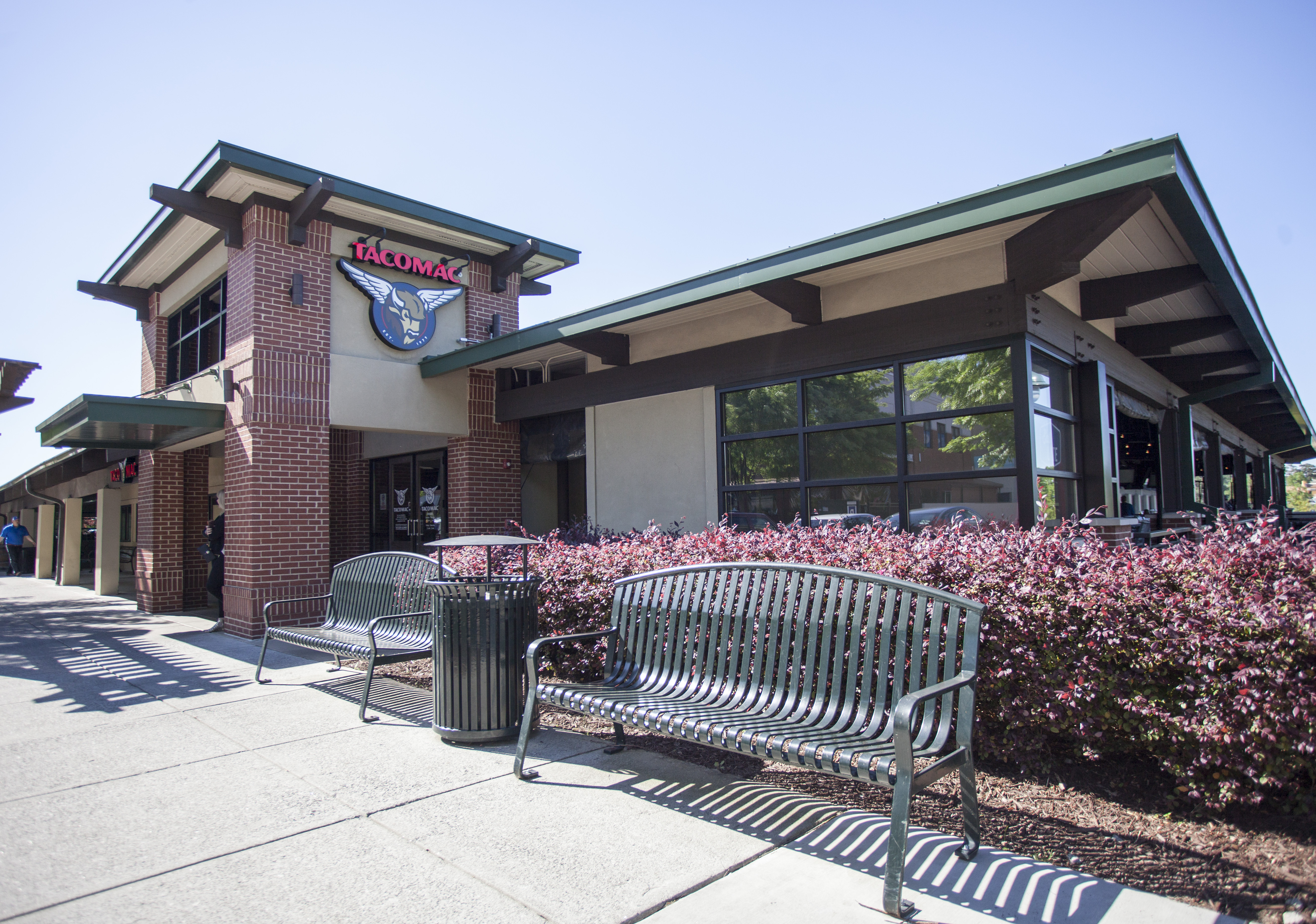
To that end, on April 4, all Taco Mac locations offered its signature wings for 40 cents each all day long. And on April 15, the company hosted a 40th anniversary “reunion party” at its Prado location, where current and former staffers and members of Taco Mac’s popular Brewniversity program enjoyed food, entertainment, the chance to win prizes and sample new cocktails and beers. All ticket proceeds from this event were donated to Taco Mac’s long-time charity partner Camp Twin Lakes, renowned for providing life-changing camp experiences for children with serious illnesses, disabilities and other challenges.
Taco Mac staff members also helped develop new wing sauces to add to the company’s menu during an internal Wingman Competition, in which teams from each location created their own sauce recipes. A panel of industry experts selected the winning sauces, while guests voted online to determine a people’s choice winner.
Most significantly for Martin, guests were invited to submit their favorite Taco Mac memories via the Taco Mac website for the chance to win $40 gift cards.
“We had dozens and dozens of responses,” Martin said. “We had a family in Peachtree City, the Ramthuns, who came to Taco Mac to watch their favorite football team and developed relationships with the staff. Then there was the couple who shared the story of their first date at Taco Mac—they’re happily married today. All of these memories of prized moments really drove home for us that we aim to be more than just a great place to have a beer and some great food while you watch a game. If you treat people like family and serve them high-quality food, they will make you a part of their lives.”
It’s that attention to customers and community that earned Taco Mac the honor of having Thursday, April 4 named Taco Mac Day by the Atlanta City Council, along with an official proclamation bestowed during a council meeting at Atlanta City Hall on April 15. But Martin and Taco Mac aren’t resting on their laurels; the brand is preparing to roll out a revamped menu at all 28 Taco Mac locations this May.
“We’ve grown from a couple of guys opening a wing restaurant in Atlanta’s Virginia-Highland neighborhood to Atlanta’s No. 1 spot to enjoy your favorite foods, discover the best craft beers on draft and experience unmatched Southern hospitality,” Martin says. “And as long as we continue to offer that, the sky’s the limit. I’m looking forward to seeing what the next 40 years bring!”
Started by two friends from Buffalo, New York, Taco Mac now has 28 locations across Georgia, Tennessee, and North Carolina.
Lavu Acquires MenuDrive
Lavu acquired MenuDrive, a branded online and mobile ordering platform for restaurants.
“Lavu and MenuDrive share a single vision and goal which is to provide restaurant owners with the online ordering technology they need to thrive. Together, the strength of our combined companies will enable our customers to achieve even higher profit margins and increased levels of customer satisfaction,” said Saleem S. Khatri, Chief Executive Officer of Lavu.
The pairing of Lavu’s and MenuDrive’s technology platforms will help restaurant owners compete with third-party delivery services. Utilizing third-party software which typically require restaurants to give away a percentage of their food and beverage income will no longer be the only option available to food establishments. The Lavu-MenuDrive technology platform which offers an intuitive control panel and seamless end-user experience allows any restaurant to realize increased profits from customer online ordering and food delivery. In addition, restaurants can achieve significant increases in traffic and revenue as a result of more effective marketing and higher brand awareness. The Lavu-MenuDrive technology platform also offers a branded online ordering presence, customized loyalty programs, and marketing automation – this helps ensure that new customers can easily source new restaurant choices. In addition, the Lavu-MenuDrive technology platform offers restaurants enhanced analytics, including detailed customer order history, product reports, sales trends, and consumer buying habits, which allow restaurants to stay current with new dining trends and changing customer activity.
“We are excited to join Lavu and bring MenuDrive’s best-in-class features and expertise to their impressive technology and team. Together, we are positioned to provide more value and benefits to restaurant owners so that they can succeed, regardless of size or budget,” said MenuDrive co-founder Adrian Fang.
Lavu’s legal advisor is the Rodey Law Firm. MenuDrive’s legal advisor is Pillar+Aught.
Tripleseat Teams with Restaurant365
Tripleseat entered a strategic partnership with Restaurant365 that will give new event solutions to Restaurant365’s users, which already have access to technology in accounting, budgeting, financial reporting and employee management.
“Through this partnership with Restaurant365, we’re able to provide our customers with the technology and services they need to continue to streamline their businesses,” said Jonathan Morse, CEO of Tripleseat. “At Tripleseat, we strive to make our users’ universe easier to navigate by providing them with the tools necessary, and partnering and integrating with great companies in the industry we are able to do just that.”
“Working with Tripleseat, our first integration with a comprehensive event management solution, is a game-changer for concepts that have struggled to find success within their event and catering departments,” said John Moody, co-founder of Restaurant365. “Together, our software will simplify complex processes and allow restaurant owners to remain above the fray while maintaining focus on their customers.”
#DiningMode
OpenTable is encouraging diners to participate in #DiningMode this Mother’s Day by putting aside their phones and giving those they’re with the gift of being truly present and connecting over a great meal. All diners can participate while dining out at any restaurant or visiting one of the nearly 500 OpenTable restaurants worldwide that are supporting the #DiningMode campaign.
According to a recent survey* commissioned by OpenTable, 73 percent of respondents rank a Mother’s Day meal as the No. 1 occasion when people should avoid checking their phones. The survey also found that nearly one third of adults say sharing a meal together is the most meaningful Mother’s Day gift followed by thoughtful conversation. Additional key takeaways from the survey include:
Losing Connections: 81 percent of diners have been annoyed by their dinner companion’s phone use in the past. 20 percent say they actually avoid eating with companions who overuse their phones. 75 percent of respondents at least somewhat agree that they use their phone too much.
Dining Hacks: The most common ‘hacks’ diners use to avoid checking their phones at the table are: turning off their phone (51 percent), turning their phone upside down (49 percent) – with millennials more likely to say they turn their phones face down. Women are 14 percent more likely to say they hide their phone to avoid using it during a meal than men (39 percent to 24 percent).
“We recently discovered that 85 percent of diners check their phones at the table while eating with others at least once,” said Caroline Potter, Chief Dining Officer at OpenTable. “By going into #DiningMode this Mother's Day, diners will have the opportunity to focus their attention on the mom in their lives and connect over a fabulous meal.”
To help encourage diners to turn off their phones this Mother’s Day, nearly 500 restaurant partners are supporting the #DiningMode campaign. Here are a few examples of what they are doing in the US:
10 Corso Como – New York, New York
Providing a complimentary dessert and a glass of champagne for those participating in #DiningMode and putting their phone down during the meal.
Aquagrill – New York, New York
Providing a complimentary dessert for mom for tables who don’t check their phones allowing for additional time for conversation.
Bellini Grill – Philadelphia, Pennsylvania
Offering moms a free complimentary dessert for those participating in #DiningMode allowing for additional time for conversation.
Bodegon – Hotel Madrid – Milwaukee, Wisconsin
Providing complimentary champagne for those who opt into #DiningMode.
Casa Chapala Mexican Cuisine & Tequila Bar – Austin, Texas
Offering moms a fresh bouquet of flowers for groups who opt into #DiningMode upon arrival.
Central Bar + Restaurant – Bellevue, Washington
Providing complimentary wine or champagne for moms allowing for more time to connect while dining out.
Churchill's – Savannah, Georgia
Giving free desserts for tables where every guest gives their phones to a secure area in the back of house office until the check is paid.
Davio’s Northern Italian Steakhouse – New York, New York
Providing free on-site family photography so diners don’t need to use their phones at all throughout the meal.
Despaña – Princeton, New Jersey
Providing a complimentary dessert for mom for tables who don’t check their phones allowing for additional time for conversation.
El Jefe – Denver, Colorado
Providing moms with a complimentary glass of wine or champagne for tables that opt into #DiningMode.
ETA Restaurant + Bar – Chicago, Illinois
Offering moms a complimentary spa gift as a thank you for all they do and for participating in #DiningMode
Fig + Farro – Minneapolis, Minnesota
Offering a free phone check to help families unplug this Mother’s Day.
Jaya – Miami, Florida
Offering moms a chocolate rose as a token of appreciation for Mother’s Day and for participating in #DiningMode.
La Palapa – New York, New York
Providing tables who participate in #DiningMode with complimentary blood orange margaritas.
Misirizzi – New York, New York
Providing complimentary dessert for moms allowing for more time to connect while dining out.
Partage – Las Vegas, Nevada
Offering guests the option to check their phones with the hostess upon arrival.
Patagonia Grill & Cafe – Houston, Texas
Providing complimentary wine or champagne for moms allowing for more time to connect while dining out.
Russian Tea Time – Chicago, Illinois
Offering moms a complimentary cup of house tea to relax and connect with loved ones.
Severance – Los Angeles, California
Offering a free glass of champagne to help adult guests get into #DiningMode.
SUGA – Philadelphia, Pennsylvania
Gifting a free Susanna Foo cookbook per table for those participating in #DiningMode as another way to connect with loved ones.
“As a family owned and operated business, taking time to be with your family is so important to us. We love the idea of encouraging diners to be present,” said Leanne Gelish, Restaurant Manager at Mac’s Steakhouse, “Time is the most important gift we can give each other and we’re happy to encourage our diners to put their phone down this Mother’s Day.”
To participate in #DiningMode simply dine out on Mother’s Day, set aside your phone and get to know the people you’re with. OpenTable has provided participating restaurants with conversation starters on coasters and downloadable PDFs to help spark a conversation between diners and their moms. Conversation starters can also be downloaded here. Diners can enter OpenTable’s giveaway for a chance to win a $400 gift card ahead of Mother’s Day. For more information about the giveaway, see the official rules here.
To learn more about the #DiningMode campaign, click here.
Chefs Cycle for No Kid Hungry
This month, employees from Kimpton Hotels & Restaurants are clocking in 300 miles for Chefs Cycle to raise funds and awareness for No Kid Hungry, top photo. This year’s goal is to have 275 chefs riding to raise $2M for No Kid Hungry, which translates into 20 million meals for kids in America facing hunger.
Kimpton will have 24 riders from more than 10 properties participate in the cycling event, including CEO Mike DeFrino. The brand is calling on all fans to join in to help fundraising efforts by donating to the Kimpton cycling team’s fundraising page.
In addition to participating in the three-day ride, Kimpton chefs and bartenders across the country will feature a cocktail or dish on their menus to benefit No Kid Hungry – see below for examples. When restaurant and bar-goers order that item, the property will donate a portion of sales to No Kid Hungry. Additionally, Kimpton Hotels & Restaurants will offer guests 15 percent off their Best Flexible Rate, and donate $10 / night to No Kid Hungry as part of their partnership with the charity in 2019. The restaurant will donate $1 from each purchase of the Orecchiette Tartufate, which includes Mild Italian Sausage, Mushroom, Black Truffle and Fontina Cream Sauce. From March 1 – June 30.
Fisk & Co. – Fisk & Co is donating $1 for each Lobster Roll sold, as well as every Short’s Brewing Company’s Local Light beer purchased.
Tre Rivali (Milwaukee, WI) – Donating $2 for each Blackberry Bramble cocktail sold, and $2 for each Poached Pear and Nutella Hand Pie sold through December 31.
The Outsider Rooftop (Milwaukee, WI) – Donating $2 for each sale of That Seasonal One cocktail, which features Maker's Mark Bourbon, Edinburgh Rhubarb Ginger Liqueur, Warre's Warrior Port, Tattersal Orange Crema, lemon, Angostura bitters.
King Tide Fish & Shell (Portland, OR) – On April 15, Chef Lauro Romero hosted a fundraiser dinner with guest chefs Maylin Chavez (Olympia Oyster Bar), Matt Sigler (Il Solito), and Tom Dunklin (The Waiting Room). The five-course family-style dinner included a seafood tower, grilled whole fish, surf-and-turf, and dessert board, plus wine and cocktail pairings. Tickets were $70 and included dinner and drinks, with 100 percent of proceeds going to No Kid Hungry.
The Copper Grouse (Manchester, VT) – Donating $1 from each Locavore and Old Forrester Old Fashioned sold.
Boleo (Chicago) – Donating $1 for each purchase of the Yaquitas (crispy yucca fries with rocoto aioli)
Outlier (Seattle, WA) – Bikes, Bites and Beats at Outlier: On Sunday, April 28, Outlier, Burn Cycle and Ketel One Botanicals are throwing the ultimate Sunday Funday for a great cause. Start your morning off with a 30 minute low-impact, high-intensity sweat sesh hosted by Burn Cycle’s expertly trained instructors. Once you’re done feeling the burn, snack on light bites from the culinary team at Outlier, and indulge in healthy-‘ish,’ custom cocktails from Outlier’s bar team featuring Ketel One Botanicals, a vodka distilled with real botanicals and infused with natural fruit essences – with no sugar and no artificial sweeteners or flavors. Stick around for more fun, including massage tables, a botanical bouquet building station and Outlier’s GM, Brian McFarland riding the ‘blender bike’ and spinning a variety of Kettle One Botanical blended cocktails. Tickets range from $20 – $30 and all proceeds benefit No Kid Hungry and Outlier’s support and participation in Chefs Cycle.
Henley (Nashville, TN) – Henley will donate $1 from every Henley Mint Julep sold during Kentucky Derby Weekend from May 3rd through May 5th.
Jane Q (Los Angeles) – Donating $1 from every Cinnamon Toast Latte ordered.
Ever Bar (Los Angeles) – Donating $1 from every Drink Your Vegetables cocktail ordered.
Angeline’s (Charlotte, NC) – Angeline’s is donating $1 for every Velvet Slipper cocktail purchased; and Tito's Handmade Vodka will match for every dollar donated
Merchant & Trade (Charlotte, NC) — Merchant & Trade is donating $1 for every Velvet Slipper cocktail purchased; and Tito's Handmade Vodka will match for every dollar donated
B&O American Brasserie (Baltimore, MD) — Donating $1 from all Queen Bee cocktail sales from May 1-31, and $1 from all duck wings sales from May 1-31.
Brabo Brasserie (Alexandria, VA) – Donating $1 from all daily special cocktail sales for the month of May.
DNV Rooftop (Washington, DC) – Donating $1 from all Grumpy Guru cocktail sales from May 1-31.
Firefly (Washington, DC) – Donating $1 from all Pedal Pusher cocktail sales from May 1-31, and $1 from all Brussel Sprouts sales from May 1-31.
Radiator (Washington, DC) – Donating $1 from all Rad Burger sales from April 1-30, $1 from all Brussel Sprouts sales from April 1-30, and $1 from all Ride the World cocktail sales from April 1-30.
Urbana (Washington, DC) – Donating $1 from every item sold from all-day Kentucky Derby event on May 4.
Bambara Kitchen & Bar (Cambridge, MA) – Sales from Bambara’s signature Choereg bread and Fiddlehead IPA will benefit Chefs Cycle/No Kid Hungry. Additionally, Chef David Bazirgan, Bambara Kitchen and Bar, returns to his hometown of Newburyport, MA on May 5th to host a guest chef dinner at Brine Oyster Bar. Net proceeds from this 4-course, $55 per person dinner will benefit Chefs Cycle / No Kid Hungry.
The Commoner (Pittsburgh, PA) – Donating $1 from each Beef Brisket Sandwich, Chicken Pot Pie and Not So Old Fashioned cocktail sold. Also hosting a fundraiser on May 7 and May 9, offering a $90 per person dinner which will feature a Grilled Apricot Salad, Herb Stuffed Lamb Breast and Hibiscus & Lavender Crème Brulee.
Stratus Lounge (Philadelphia, PA-) – Donating $2 per order of Pastrami Sliders to No Kid Hungry.
ParTech Partnerships
ParTech, Inc. (PAR) forged new partnership with Altametrics and Hubworks that will allow PAR’s cloud-based Brink POS® software solution to seamlessly connect with Altametrics Enterprise Office and the Hubworks suite of applications through the Any Connector tool. The partnership helps clients streamline restaurant operations by allowing better cost controls over labor and food expenses. Additionally, Altametrics and Hubworks will make menu and staff changes faster and more efficient – changes will only need to be made once and will be reflected across all solutions, ensuring consistency across the organization while reducing the time spent on data entry.
"The integration provided by Any Connector gives Brink POS and Altametrics customers the ability to use all of their software solutions more effectively. Restaurant operators, regardless of how large or small their organization is, will now have the insight they need to better manage their food and labor costs, while reducing operational efforts at the same time. The simplification of the complex task of product integration is an exciting technology advancement we are delighted to provide to our joint customers,” said Steven Sedam, Integrations Project Manager, Altametrics.
“We are excited to welcome Altametrics to Brink’s large partner ecosystem,” said Paul Rubin, Chief Strategy Officer, ParTech, Inc. “The ease of use and accessibility to data will be very beneficial to Brink customers and will allow restaurant operators to focus on providing a great guest experience.”
Artisan Exchange and Honeycomb Credit Join Forces
Artisan Exchange and Honeycomb Credit are joining forces. Artisan Exchange already offers its tri-state area food businesses affordable flexible space, retail market channels, access to a commercial kitchen, and sales and distribution support. Now they will offer businesses that need expansion capital an opportunity to crowdsource loans at reasonable rates and terms from their existing customers.
Frank Baldassarre, Principal for Artisan Exchange commented, “This is a perfect partnership for us. I come from a 30-year career in commercial banking and am intimately aware that one of the biggest challenges for any small food business is financing. The way small business lending is done right now is ineffective. George Cook and the folks at Honeycomb Credit are doing something transformative. By supporting individual businesses as they expand they are really connecting the whole community with capital.”
George Cook, CEO of Honeycomb Credit added, “Artisan Exchange is a major force in Pennsylvania for artisanal food purveyors. They have a delivery system to 35 Metro Philly Food Stores and are an approved Mid Atlantic Whole Foods Markets Distributor. Artisan Exchange works with some of the very best businesses in the state, and we are thrilled to be supporting those companies as they grow. In addition, Artisan Exchange shares our values of helping entrepreneurs succeed in local communities, and I anticipate we will do great things together.”
Thanx Offers Native Online Ordering
Thanx now offers native online ordering capabilities to restaurant brands. Among the first to implement the new service is PINCHO. Thanx will develop PINCHO’s mobile app to include native ordering and will power their loyalty program to serve as a single tool to effectively communicate with every customer through a targeted approach. Customers will be able to order directly online through the PINCHO app and will have a single account to activate online ordering and loyalty. Through the seamless ordering experience, customers can benefit from personalized offers right at the point of an online purchase.
“With third-party delivery service providers almost ubiquitous, restaurants are challenged to maintain profitability after high commission fees, and to stay competitive restaurants need a strategy to create an owned channel,” said Thanx CEO and Founder, Zach Goldstein. “It’s critical for this channel to represent their brand consistently and create a digital experience that matches the expectations of their customers. Most restaurants lack the resources or expertise to build and maintain a modern mobile application with online ordering. Now restaurants finally have the option to drive additional revenue more efficiently through direct delivery.”
“We are always looking for opportunities to interact better with our customers and through this new offering, we created a sophisticated mobile ordering experience that looks and feels exactly like our brand,” said Jayson Tipp, CEO of PINCHO. “With this implementation, we will offer a more consistent and seamless digital and in-store customer experience. Thanx allows us to fully understand the behavior and preferences of our customers, optimize each communication with them, and reward them for purchasing the food they love.”
When customers place an order, they are added to the customer database so restaurants can see a complete view of customer spending habits across channels. Every customer purchase, whether in-store or online, is made available to the restaurant so they can reward customers for their loyalty, target them with promotions based on past purchases, and offer personalized digital experiences that differentiate them from the competition.
Chefs for Change
In May 2019, five of the world’s best chefs and ambassadors of the Chefs for Change movement, Gaggan Anand,Andoni Luis Aduriz, Luke Dale Roberts and Kyle and Katina Connaughton, are exchanging high-end kitchens for remote fields and fishponds as they travel to eastern Africa and Peru to explore the challenges facing struggling small-scale food producers.
Gaggan Anand, chef at Gaggan, named as No 2 in Asia’s 50 Best Restaurants, and Andoni Luis Aduriz, chef at Mugaritzin northern Spain, No 9 on the World’s 50 Best Restaurants list, are both heading to Tanzania’s Babati District to meet rice farmers. Luke Dale Roberts, chef at The Test Kitchen in Cape Town, South Africa, named as Africa’s top restaurant, is travelling to Kenya’s Kisumu District to meet fish farmers. Husband and wife Kyle and Katina Connaughton ofSingleThread in Healdsburg, USA, winners of the 2018 Miele One to Watch Award, will go to Peru to meet coffee and cocoa farmers.
The farmers the chefs will meet are taking part in projects run by Farm Africa, an international NGO dedicated to driving agricultural and environmental change in eastern Africa, and TechnoServe, a leading non-profit organisation dedicated to harnessing the power of the private sector to help people lift themselves out of poverty.
The chefs will witness first-hand how poverty, environmental degradation, climate change and lack of access to markets are thwarting the potential of small-scale food producers, but will see how efforts to improve agricultural expertise, manage and preserve ecosystems, and develop links to markets can transform lives across whole communities.
The chefs will learn about local cuisine and work with local farming families to create dishes using the produce from the projects they visit.
A short film about the chefs’ trips will be shared by the World’s 50 Best Restaurants. Farm Africa, the official charity of the awards, will work with the chefs to share stories about how the projects they visit are contributing to achieving one or more of the UN’s 17 Sustainable Development Goals (SDGs) that aim to end extreme poverty, hunger, inequality and injustice, and fix climate change by 2030.
Exceeding Charitable Goals
Since announcing their partnership one year ago today, Moët Hennessy USA has exceeded its 2018 goals of helping City Harvest feed families across New York City by 1.25 times. As a result, they will continue their mission of donating both time and resources to assist City Harvest, which is New York City’s largest food rescue organization, throughout 2019. Moët Hennessy is currently the exclusive wine and spirits company to partner with City Harvest in this manner.
Over the past year, Moët Hennessy USA has been involved in fundraising and volunteered 248 hours, surpassing their 2018 goal in pursuit of feeding New Yorkers who are struggling to put meals on their tables. The company and its employees helped City Harvest feed nearly 1 million New Yorkers in their year-long partnership by giving time and raising funds.
Last April, in celebration of National Volunteer Week, Moët Hennessy USA employees participated in City Harvest’s Repack on the Road in which they assembled snack packs which were distributed to children in pre-school, Head Start and after school programs. Moët Hennessy employees also donated their time and resources by participating in the Ace Endico Food Rescue, and the New York Produce Show. This year, Moët Hennessy USA will be participating in volunteer work including the Skip Lunch Fight Hunger fundraising campaign at the MHUSA office.
Moët Hennessy was the sponsor for all of City Harvest’s 2018 signature events, including the 35th Anniversary Gala on April 24th at Cipriani 42nd Street, honoring Chrissy Teigen, Robin Hood, Bill and Wendy Mills and José Andrés. The 2018 gala raised enough to help feed more than 17,000 New York City families for a year. This is City Harvest’s largest annual fundraising event, and will be held again this April, in which Moët Hennessy will be the official wine and spirits sponsor. Other events include Summer in the City which raised enough to help feed over 6,000 families for the entire summer and BID which was a record-breaking year for the event, raising enough to feed more than 18,000 New Yorkers in need for an entire year.
To further drive Moët Hennessy’s fundraising efforts, Smoke Tree wines launched a by the glass program at 34 supporting restaurants in New York, where $2 was donated to City Harvest for every bottle of wine sold – helping to feed 8 New Yorkers for a day.
"The Moët Hennessy USA team is so proud to have exceeded our 2018 goals, helping this incredible organization feed families around New York City,” said Jim Clerkin, President and CEO of Moët Hennessy North America. “We know that City Harvest shares our values, along with our commitment to the community and sustainability, and we are thrilled to continue this mission together.”
The City Harvest partnership builds on the work of the Moët Hennessy Philanthropic Committee, charged with supporting national charitable initiatives that tie with the heritage and identity of the brands, while fostering a community spirit within the organization.
With more than 1.2 million New Yorkers struggling to put meals on their tables, City Harvest’s work to rescue and deliver nutritious food for our neighbors in need remains critical,” said City Harvest CEO Jilly Stephens. “This year, we will rescue and deliver 61 million pounds of food and deliver it to hundreds of community food programs across the city. Our work is possible thanks to the dedicated support of partners like Moët Hennessy USA who step up to ensure that everyone in our city has the food they need to thrive.”
Sustainable Coffee
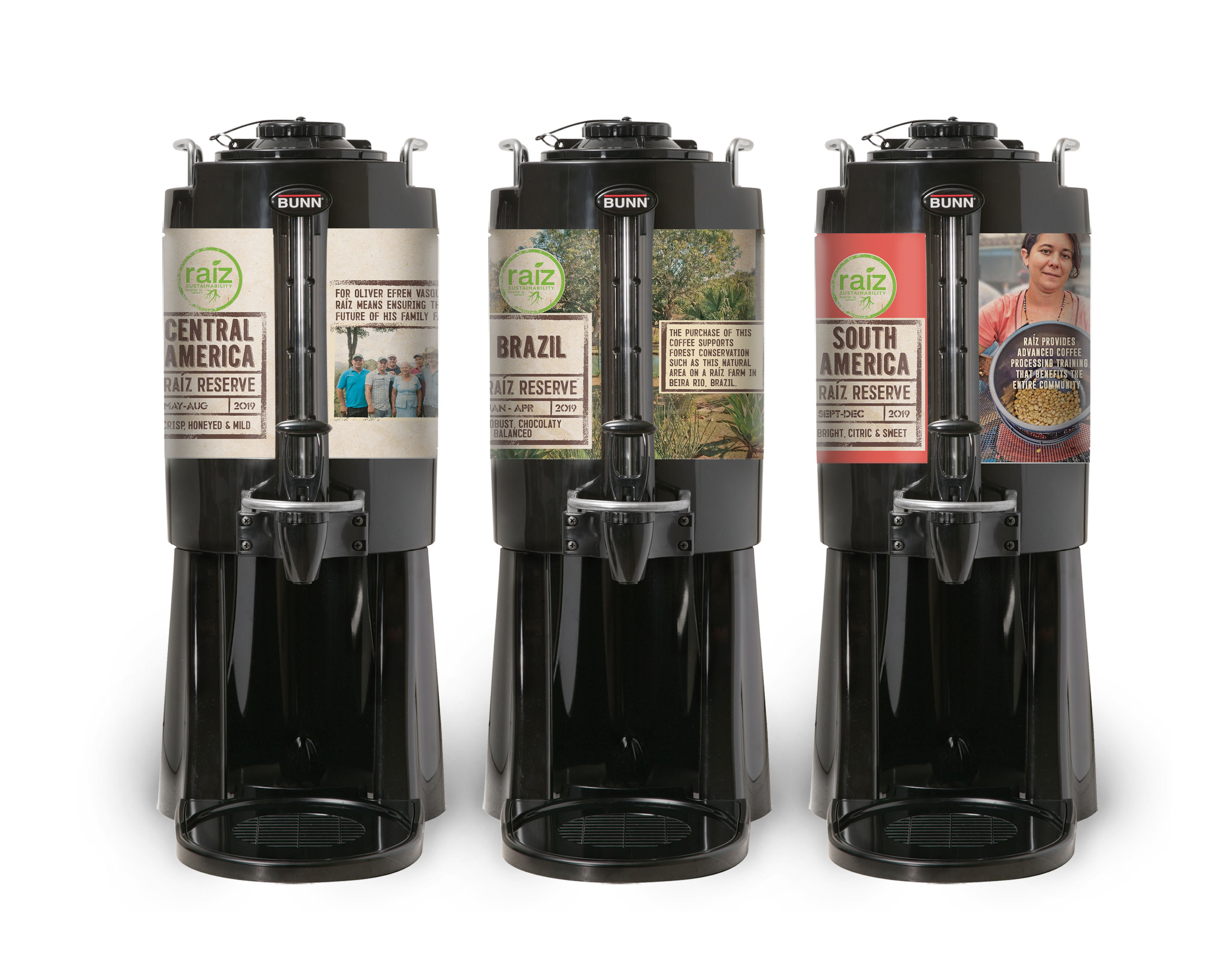
S&D Coffee & Tea introduced a new line of sustainably sourced coffees as a part of its Raíz Sustainability® sourcing platform. These products are the first 100% sustainably sourced coffees to be produced and branded with both the S&D Coffee & Tea and Raíz branding.
According to Conservation International, 150 percent more coffee is needed by 2050 in order to meet future demand. Raíz Sustainability® is S&D’s direct response to this looming crisis. As a leader within the coffee industry, S&D is committed to building a more sustainable supply chain, while improving resources and quality of life for coffee farmers.
Raíz Reserve coffees are exclusively available as seasonal offerings, guaranteeing peak freshness and quality, as each coffee is harvested by farmers during the ideal season for each particular region. The new varietals include a crisp, medium/light roast with hints of honey from Central America, debuting this month, and a bright, citric and sweet medium roast from South America, which will be introduced in September of 2019 and remain available through the end of the year. These new launches follow the recently released robust Brazilian dark roast.
“We are very proud to be launching our first line of exclusively sustainably sourced coffees from the family of Raíz farmers in three origins,” said Olga L Cuellar-Gomez, head of S&D sustainability efforts. “This launch is a testament to the power and potential of the Raíz Sustainability® platform, and we look forward to continuing our efforts with more 100% sustainably sourced coffee offerings in the years to come.”
Best Pies
With a sea of pies enticing eager judges anticipating their first tasty bites, the sweet smell of success was in the air in Orlando as the best commercial bakers in the nation were named at the 25th Annual APC National Pie Championships in Orlando.
Held April 12 and 13 in Orlando at the Renaissance Orlando SeaWorld Hotel, here amateur, professional and commercial bakers entered their most delicious pies in both sweet and savory flavor categories for bragging rights to be named the nation's best.
In the commercial division, bakeries from across the nation and Canada competed in flavor categories including savory pot pies and sweet flavors ranging from apple, lemon and pumpkin to citrus, fruit and berry, pecan and banana cream to sugar-free and even an open category. The pies were taste-tested by more than 200 judges.
First place was awarded for the best commercial pies in each flavor category, with top honors going to Harlan Bakeries, with 19 blue ribbons, closely followed by Weston Foods, with 18 blue ribbons.
Top pies from Harlan Bakeries, Avon, Ind., included "Bursting from Berries," "Chocolate Maple Sugar Creme," "Honey Crisp Apple," "Cheesecake Pecan Brittle" and "Peachy Keen."
Some of the judges favorites from Weston Foods, Brownsburg, Ind., included "I Only Have (Cherry) Pies for You," "Guittard Chocolate Cherry Pie," "Strawberry Rhubarb Lattice Pie," and "Hold the Sugar Pineapple Pie."In addition to sweet pies, first place ribbons were awarded for three savory pot pies including Southeastern Grocers' "Traditional Premium Chicken Pot Pie" and "Premium Pizza Pot Pie" and World of Pies' "Spinach and Feta Pot Pie."
The list of winning commercial bakers and number of ribbons is listed below. A complete list including each company's list of first place winning pies is available at piecouncil.org.
- Harlan Bakeries, Avon., Ind. – 19
- Weston Foods, Brownsburg, Ind. – 18
- Southeastern Grocers, Jacksonville, Fla. – 14
- Rocky Mountain Pies, Salt Lake City, Utah — 12
- Publix Supermarkets, Lakeland, Fla. – 11
- Jessie Lord Bakery, Torrance, Calif. – 9
- Table Talk Pies, Worcester, Mass. – 8
- Michele's Pies, Norwalk, CT – 5
- Walmart, Inc.,Bentonville, Ark. – 5
- Wick's Pies, Winchester, Ind. – 4
- Meijer, Grand Rapids, Mich. – 3
- Something Sweet, New Haven, Conn. – 3
- Sunset Grill, Clearwater, Fla. – 3
- The Rose Plantation, Fruitland Park, Fla. – 3
- Lisa's Pie Shop, Atlanta, Ind. – 2
- Mike's Pies, Tampa, Fla. – 2
- A Fish Called Avalon, South Beach Miami, Fla. – 1
- Wayne's Family Restaurant, Oconto, Wisc. – 1
- World of Pies, LLC, Norcross, Ga. – 1
- Norske Nook, Osseo, Wisc. — 1
"Our commercial bakers represent the best of the best in the pie making industry," said Linda Hoskins, Executive Director, American Pie Council. "While coming together each year to compete, our family of top commercial pie makers also share ideas that furthers the growth of the pie industry at large. We're proud of our 25 years fostering America's love affair with pie and can't wait to see what our bakers cook up over the next 25 years!"
#DiningMode: Phone’s Off for Mom and Chefs Cycle for a Good Cause posted first on happyhourspecialsyum.blogspot.com